This comparative study explores the relation between the Vimuttimagga and Visuddhimagga, the Path of Freedom, and the Path of Purification, both classical meditation manuals of the Theravada tradition.
Two small classics of the Pali Canon in one volume. The Udana is a compilation of eighty short but deeply impressive suttas, each expressing the Buddha's joyful insight into the profound significance of apparently simple events.
What is to the advantage of the scholar is sometimes to the disadvantage of the layman. While going through the elaborate explanations of a certain topic in the Visuddhimagga, ...
This book contains an anthology of 154 selected discourses from the Pali canon. The original translation was by Nyanaponika Thera and was published in the BPS Wheel Series in three volumes.
The Story Of The Buddha - The Author going to tell you the story of the life of a very great man. He was not great as the world usually regards greatness , been neither a conqueror nor a hero in any worldly sense-in fact for many years of his life he was a beggar , meaning an ascetic in the correct sense of the term.
Jataka Tales Abridged – Jataka Stories have been inspiring the people for generations to lead a life of virtue. The 30 jatakas presented in this book are rich with ingredients that make them delightful reading by children. The characters are very often animals, birds, snakes as well as demons. They say things and do things in the same way as the humans do. By reading these stories the children while deriving pleasure would unconsciously cultivate some virtue which is the underlying theme of any jataka story.
Discussion On Sathipattana - Sattipattana has been commonly translated as ' Foundation Of Mindfulness '. However the more accurate and meaningful translation is focuses of Mindfulness.
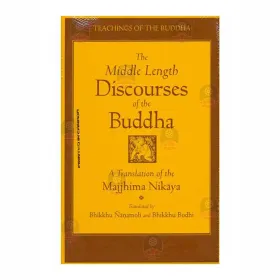
This book offers a complete translation of the Majjhima Nikaya, or Middle Length Discourses of the Buddha, one of the major collections of texts in the Pali Canon, the authorized scriptures of Theravada Buddhism. This collection--among the oldest records of the historical Buddha's original teachings--consists of 152 suttas or discourses of middle length, distinguished as such from the longer and shorter suttas of the other collections. The Majjhima Nikaya might be concisely described as the Buddhist scripture that combines the richest variety of contextual settings with the deepest and most comprehensive assortment of teachings. These teachings, which range from basic ethics to instructions in meditation and liberating insight, unfold in a fascinating procession of scenarios that show the Buddha in living dialogue with people from many different strata of ancient Indian society: with kings and princes, priests and ascetics, simple villagers and erudite philosophers. Replete with drama, reasoned argument, and illuminating parable and simile, these discourses exhibit the Buddha in the full glory of his resplendent wisdom, majestic sublimity, and compassionate humanity.
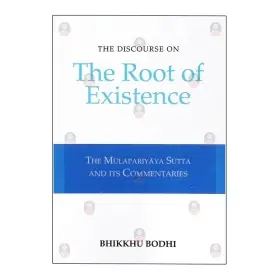
The Discourse On The Root Of Existence - This profound and difficult discourse of the Buddha aims at exposing and eliminating the concept of the ego at its most fundamental level. The commentary offers a detailed explanation of the sutta while a long introduction investigates the text's meaning and its implications for philosophy and psychology.
The Buddha traces the entire progress of a disciple from the first step on the path to the attainment of Nibbana in this second sutta of the Sutta Pitaka, one of the most elevating of the Buddha's discourses. The work is not only a great spiritual classic, but also a literary gem distinguished by its beauty of poetic imagery.
The Roots Of Good And Evil - Ven. Nyanaponika Thera deals exhaustively with psychological roots of morally good and morally wicked actions and shows how this knowledge could be linked up with mindfulness meditation. A great companion for the scholar and the layman.
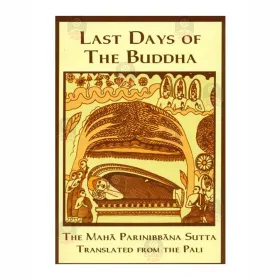
This work is the Pali Canon’s account of the Buddha’s last journey to the small jungle town where he attained his final release. The sutta is not only a vivid historical document but a great religious classic. Includes helpful explanatory notes.
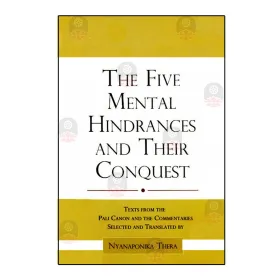
The Five Mental Hindrances and Their Conquest - In this booklet, following a brief introduction, Ven. Nyanaponika gives a selection of passages which he translated from the Discourses of the Buddha and the commentaries.
Three Cardinal Discourses Of The Buddha - This booklet contains the first three discourses that the Buddha gave after his Awakening.In these three discourses the Buddha displays the fundamental, cardinal teachings on the Four Noble Truths from which all of his teachings branch and to which they all point back.
Kalama Sutta - The discourse to the Kalama is well known for its encouragement of inquiry. It sets forth the principles that should be followed by a seeker of truth and contains a standard by which spiritual teachings can be judged. In this discourse the Buddha shows that the reason for a virtuous life does not necessarily depend on beliefs, but on mental well-being acquired through the overcoming of greed, hatred and delusion.
The Bhikkhu Patimokkha-A Word By Word Translation - It is an exact, word by word translation of the code of Discipline meant for the Buddhist monks – though intended for the Buddhist monks, yet it will be of concern to those who evince an interest in Pali and Buddhist monastic law.
Code Of Conduct for Buddhist Nuns - In this work is presented the rules of conduct for Buddhist nuns as enshrined in the Pali Canon; immaculately translated into English and Presented with the context by the internationally renowned pioneer of the establishment of Bhikkhuni Sasana in Sri Lanka, Ven.Bhikkhuni Dr. Kolonnawe Kusuma. It in revised by Samaneri Akincana of Germany.
Analysis Of The Bhikkhu Patimokkha - The main part of this book is a word by word translation of the Pali text of the Bhikkhu Pātimokkha; also included are a critical edition of the Pali text, a translation, discussions of technical terms and procedures, an analysis of the structure of the Pātimokkha, and comparisons with rules in the Prātimoksasutras of other early Buddhist schools.
The Theravada Abhidhamma - This volume examines the Abhidhamma perspective on the nature of phenomenal existence. It begins with a discussion of the dhamma-theory (the theory of real existents) which provides the ontological foundation for the Abhidhamma philosophy. It then explains the category of the nominal and the conceptual as the Abhidhamma’s answer to the objects of common-sense realism. Among the other topics discussed are the theory of double truth, analysis of mind, theory of cognition, analysis of matter, the nature of time and space, the theory of momentary being, and conditional relations.
Study Notes On Abidhamma - This book serves to help the many keen learners of Buddhism who are in need of explanatory notes on subjects which have not been dealt with before, in the English medium. Students who sit for the Dhamma and Abhidhamma examinations held by YMBA Colombo could use this book to study progressively for all five examinations from the Junior level to the Diploma level.
Abhidhamma Studies - Bold and brilliant essays exploring the psychological and philosophical foundations of the Abhidhamma. Shows the practical relevance to the spiritual life of the Abhidhamma's methodical psychological analysis.
Rs 380.00
This site uses cookies. By continuing to browse the site you are agreeing to our use of cookies. Find out more here.